Load
Load PCB assemblies into the two-level fixture.

Offline Batch PCBA Cleaning System
A controlled offline batch cleaning system combining chemical spray cleaning, DI-water rinsing and hot-air drying in one automatic process.
Designed for removing flux residues, solder-paste contamination and other organic or inorganic residues from SMT, THT and mixed-technology PCB assemblies.
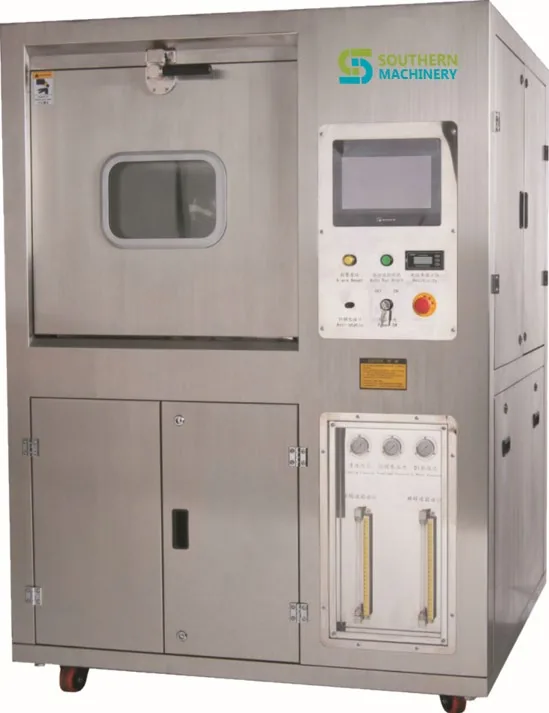
Controlled Cleaning Cycle
One automatic cycle sequences chemical spray cleaning, DI-water rinsing and controlled hot-air drying. Time, temperature, rinse cycles, spray pressure and drying conditions can be adjusted according to the actual PCBA and validated cleaning process.
Recirculated cleaning liquid sprays the loaded assemblies through the cleaning stage.
Adjustable DI-water spray rinsing removes cleaning-agent residue and contamination.
Controlled hot-air drying removes residual moisture before inspection.
Cleaning Workflow
The workflow provides a repeatable sequence while leaving the process recipe available for engineering adjustment.
Load PCB assemblies into the two-level fixture.
Select the validated process recipe.
Recirculated chemical spray removes residues.
Adjustable DI-water spray rinsing removes cleaning-agent residue and contamination.
Controlled hot-air drying removes residual moisture.
Unload, inspect and complete required functional checks.
RECIRCULATED CHEMICAL LOOP → DI-WATER RINSE → HOT-AIR DRY
Final settings should be confirmed according to the assembly, flux type, cleaning agent, component sensitivity and required inspection method.
Spray Access
Upper, middle and lower rotating spray bars support access around a two-level loading fixture.
Sprays downward toward the upper loading level.
Provides spray access between the two loaded PCBA levels.
Sprays upward toward the lower loading level.
Actual spray coverage and process settings are confirmed with representative assemblies.
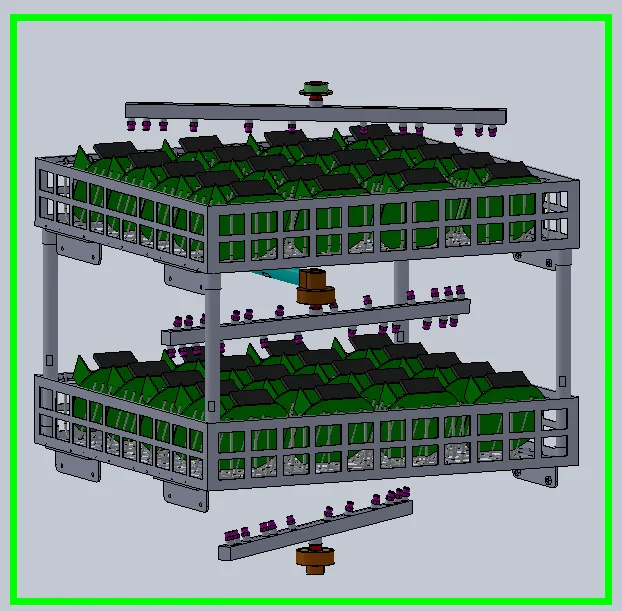 Upper sprayMiddle sprayLower spray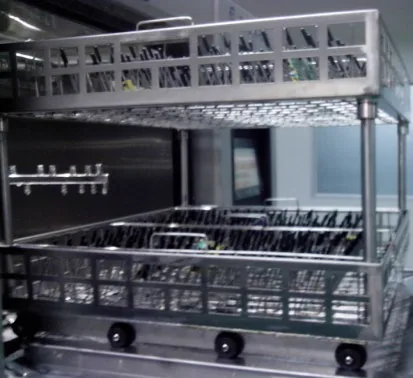
Batch Loading
The SUS304 stainless-steel fixture and basket structure supports batch cleaning with loading adjusted to the actual PCB size and fixture arrangement.
Assembly Fit
The cleaning process can be evaluated against the actual PCBA, contamination profile, cleaning chemistry and agreed inspection method.
Representative assemblies make it possible to assess loading, material sensitivity, cleaning access, drying and final inspection requirements before the production recipe is released.
For flux-residue cleaning evaluation on surface-mount PCB assemblies.
For through-hole assemblies requiring an offline batch cleaning process.
For boards combining surface-mount and through-hole components.
Subject to fixture and process validation.
The process can be evaluated for rosin flux residue, water-soluble flux residue, no-clean flux residue, solder-paste balls, organic contamination and inorganic contamination.
Illustrative Cleaning Example
Drag the control to compare the supplied example. This is an illustrative cleaning example only.
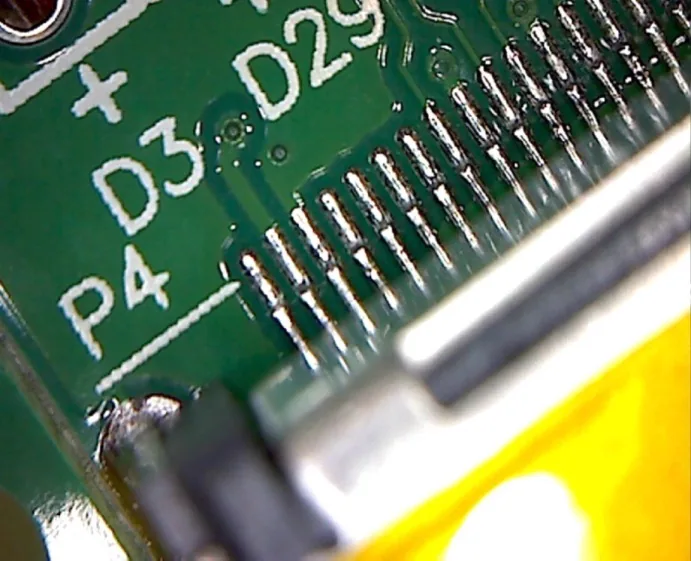
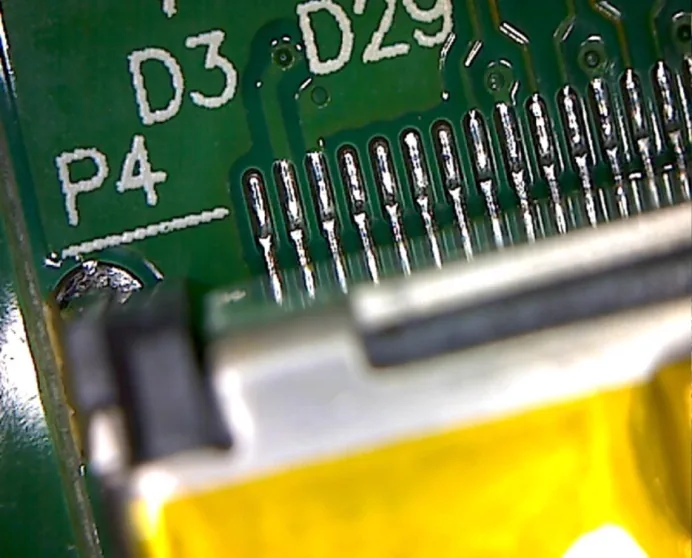
Actual results depend on PCBA design, contamination, flux type, cleaning chemistry, temperature, spray pressure, cycle time and validated process settings.
Adjustable Process Control
Process ranges support recipe development. Final production settings should be confirmed with representative assemblies.
These are general reference values from the source material. Actual settings depend on the assembly and process validation.
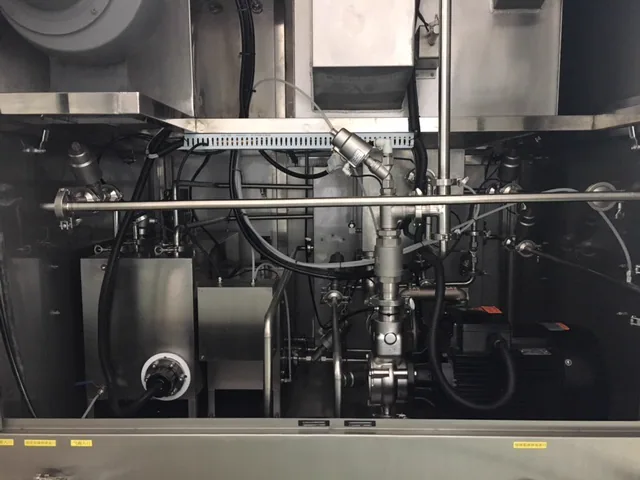
Fluid Management
The supplied information identifies heated process tanks, chemical recirculation, filtration, pressure indication and rinse-water monitoring.
Machine Detail Gallery
All gallery images originate from the supplied PDF and PPT product material. Select an image to inspect it.
Machine Overview
Select a hotspot to review the visible equipment area. On mobile, use the numbered list alongside the image.
Technical Specifications
The following specifications come from the supplied product material. Final configuration follows order engineering review.
Final configuration note. Utility standard, dimensions, connection details and machine configuration should be confirmed during order engineering review.
Sample Validation
A representative assembly allows Southern Machinery and the customer to agree the cleaning process before production release.
Confirm board dimensions, maximum component height and fixture loading.
Review relays, connectors, labels, plastics, adhesives and moisture-sensitive parts.
Start with controlled temperature, pressure and cycle time.
Assess flux residue, trapped liquid, material changes, drying and electrical function.
Release production settings after the representative sample passes agreed checks.
FAQ
For project-specific points, share a representative assembly so the process can be reviewed against the actual application.
The process can be evaluated for rosin, water-soluble and no-clean flux residues, solder-paste balls, and mixed organic or inorganic contamination. Final results depend on the actual board, chemistry and validated settings.
Yes. The SME5600D is positioned for SMT, THT and mixed-technology PCB assemblies. Double-sided boards are subject to fixture and process validation.
It can be evaluated for no-clean flux residues, subject to the actual flux chemistry and validated cleaning process.
One automatic cycle sequences chemical spray cleaning, DI-water rinsing and controlled hot-air drying.
Batch quantity depends on PCBA size, component height, spacing and fixture arrangement. It should be confirmed with the customer’s representative assemblies.
The supplied specification lists 610 × 560 × 100 mm × 2 layers.
Yes. The source material lists adjustable spray pressure of 30–80 PSI, cleaning-liquid temperature of RT–75°C, and drying temperature of RT–99°C.
Cleaning and drying time are adjustable from 0–99 minutes. The older source lists a typical 40–60 minute process-development reference window, not a fixed production cycle time.
Yes. A representative uncleaned PCBA, board dimensions, component height, flux or solder-paste information, sensitive materials and inspection target help define the evaluation.
Engineering Review
Share a representative uncleaned PCBA, PCB size, maximum component height, expected batch quantity, flux or solder-paste information, sensitive components and the required cleanliness or inspection method.